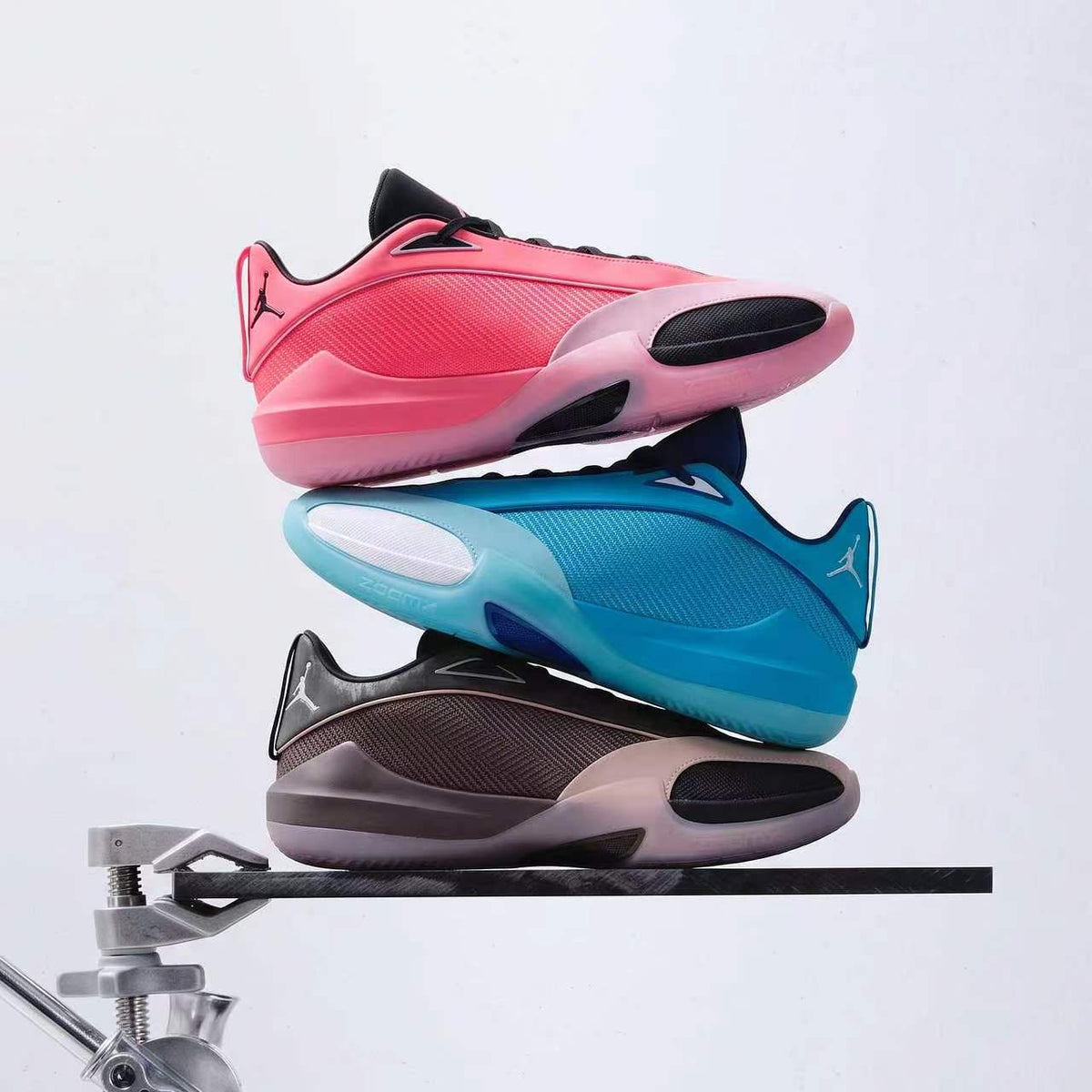

Nike Ja Twelve Time Review
Nike has turned Ja Morant’s name into a genuine $90 outdoor-ready takedown model. The Twelve Time is simple, soft and built to be used hard—but it should not be confused with a discounted Ja 4.
A real budget shoe, not a stripped signature
The Ja Twelve Time makes the most sense as an affordable practice and outdoor shoe. Its durable rubber, uncomplicated foam and reinforced upper are useful choices at $90. Players expecting the Ja 4’s cushioning, torsional structure or refined containment will notice the savings immediately.
The name is confusing because Nike has already used ‘Twelve Time’ on Ja signature colorways. This 2026 release is different. It is its own low-cut model, positioned beneath the $130 Ja 4 and built around durability rather than premium tooling. The US launch colorway is ‘Solar’, style IM4164-600, with an EP version carrying extra-durable rubber in several Asian markets.
That distinction matters. A takedown model does not need to imitate every part of the signature shoe to be successful. It needs to preserve the athlete’s basic playing idea at a lower price. Twelve Time keeps the emphasis on quick changes of direction, a close low-cut shape and aggressive rubber. It removes the expensive foam and support package.
What is actually inside?
Soft foam midsole
Nike does not give the compound a premium name. Independent comparisons identify it as conventional EVA-family foam rather than Cushlon 3.0, ZoomX or a supercritical formulation. It compresses easily and feels comfortable, but its energy return and long-term resilience are unlikely to match the Ja 4.
Molded upper
The sculpted synthetic shell supplies much of the shoe’s visual identity and helps the upper resist stretching. It is paired with ballistic woven sections in higher-wear areas, prioritizing repeat use over a soft premium hand feel.
Ja-inspired directional traction
The outsole uses large triangular and herringbone-like sections designed around sharp cuts. The pattern is deeper and visually less delicate than many indoor-first signature outsoles.
Low-cut conventional closure
A padded collar, classic laces and internal heel shaping handle lockdown. There is no JA-Frame equivalent and no elaborate external support cage.
Outdoor-tested rubber outsole
Nike explicitly positions the rubber for outdoor play. The EP edition adds extra-durable rubber, making it the more logical option when rough concrete is the priority.
Traction: the part with the clearest promise
The outsole is the strongest reason to take Twelve Time seriously. Large rubber sections run across the forefoot and heel, with edges arranged to catch the floor during forward acceleration, braking and lateral cuts. Nike describes the rubber as sticky and says the shoe was outdoor tested. The EP listing goes further by explicitly calling out an extra-durable rubber outsole.
That construction is encouraging, but long-term evidence remains thin. Nike’s own US product page had no customer reviews when checked, and there is not yet a large body of controlled dust testing. The safest conclusion is that the pattern and rubber depth are appropriate for mixed surfaces, while exact indoor squeak and dust tolerance still depend on the court and colorway compound.
For buyers who destroy translucent or thin signature outsoles outdoors, the Twelve Time is a more rational choice. Its tread is not precious. That alone gives it a useful place next to—not below—an indoor game shoe.
Cushioning: comfortable, with a firm ceiling
Early hands-on impressions repeatedly describe the foam as surprisingly soft. Under step-in pressure, it gives more than the $90 price might suggest. That softness should make the shoe comfortable for practice, casual play and lighter guards who do not need a highly structured platform.
Soft, however, is not the same as energetic. There is no named Air unit, ZoomX insert or supercritical sockliner. The foam supplies basic impact protection and a familiar bounce, but it lacks the layered response of the Ja 4’s Cushlon 3.0 midsole and SPRPWR sockliner. Players moving between the two should expect less snap and less defined support through the middle of the shoe.
The trade is sensible at this price. Outdoor foam must absorb repeated impact without making replacement painful. Twelve Time feels designed to be worn down rather than preserved. Heavier players and high-volume jumpers should keep expectations realistic: softness at try-on does not guarantee deep-impact protection after months of compression.
Support: the upper does more of the work
The molded ridges are functional as well as visual. They limit upper stretch and give the laces a firmer structure to pull against. Ballistic woven material reinforces the package, while the low collar leaves the ankle free. For straight-line speed and routine cuts, the setup should feel secure enough.
The missing piece is a clearly documented midfoot shank or JA-Frame. Sole Retriever’s direct comparison notes that the Ja 4 carries more sophisticated internal structure, whereas Twelve Time relies on conventional geometry. That makes fit more important: if the shoe is too long or the laces cannot hold the foot back, the upper has fewer secondary systems to rescue containment.
We would place the support level in the practical middle. It is more deliberate than a casual sneaker, but it is not the model to choose solely for maximum torsional rigidity or heavy-player containment.
Fit and materials: simple by design
The molded shell gives Twelve Time a clean shape but may require a short break-in period across the forefoot. The material will not adapt as freely as open engineered mesh. Most buyers should begin true to size; narrow-foot players should pay close attention to heel hold, while wide-foot buyers should try the shoe before sizing down because the structured sidewalls will not stretch dramatically.
Material quality matches the price. The upper is durable and purposeful rather than plush. There is enough padding around the collar for everyday use, but no attempt to disguise this as a $150 product. That honesty works in the shoe’s favor: the finish is easier to clean, harder to baby and appropriate for school gyms and outdoor runs.
Outdoor use is the main event
Nike rarely makes the intended environment this explicit. The standard model is described as outdoor tested, while the EP version specifically highlights extra-durable rubber. Combined with the reinforced upper and inexpensive foam package, Twelve Time reads less like a compromised signature shoe and more like a deliberately replaceable work shoe.
Players who rotate through concrete courts should still monitor the forefoot edges and toe drag area. No outsole is immune to abrasive asphalt. The value proposition is simply better: wearing through a $90 shoe built for the task hurts less than sanding down a limited Ja 4 colorway.
Ja Twelve Time vs. Ja 4
| Category | Ja Twelve Time | Ja 4 |
|---|---|---|
| US retail price | $90 | $130 for standard adult colorways |
| Cushioning | Unnamed soft foam | Cushlon 3.0 plus SPRPWR supercritical sockliner |
| Support structure | Molded upper and conventional platform | JA-Frame and more developed tooling |
| Upper | Molded synthetic with ballistic woven reinforcement | Textured synthetic structure over mesh |
| Traction priority | Deep, outdoor-oriented directional pattern | More precise signature traction layout |
| Best buyer | Budget, school, practice and outdoor player | Player wanting the more complete performance package |
The $40 gap buys real technology. Choose Twelve Time because its simpler construction matches your use, not because it secretly performs exactly like the Ja 4.
Final verdict: easy to understand, easy to use
The Ja Twelve Time is not exciting because it hides expensive technology at a bargain price. It is appealing because Nike made sensible decisions about where a $90 basketball shoe should spend its money. The outsole is substantial, the upper is reinforced, the ride is soft enough and the silhouette still feels connected to Ja Morant’s quick, angular game.
Its limitations are just as clear. Cushioning is ordinary, midfoot technology is basic and the upper prioritizes survival over refinement. Players buying one pair strictly for high-level indoor games will get a more complete shoe by paying for the Ja 4 or shopping a discounted premium model.
For outdoor runs, team practice, school basketball and younger players growing through sizes, Twelve Time is the more logical product. It is a takedown that understands its job.
Best for: quick guards, outdoor players, students and anyone who wants a replaceable Ja-branded workhorse. Skip it if: you want premium rebound, strong torsional hardware or the full Ja 4 experience.
FAQ
Is the Ja Twelve Time the same shoe as the Ja 4?
No. Twelve Time is a separate $90 takedown model. It uses standard soft foam and a simpler support platform, while the Ja 4 uses Cushlon 3.0, a supercritical SPRPWR sockliner and JA-Frame support.
Does the Ja Twelve Time have Zoom Air?
Nike does not list Zoom Air, ZoomX or another air unit. The official specification only identifies a soft foam midsole.
Is the Ja Twelve Time good for outdoor basketball?
That is one of its clearest intended uses. Nike says the shoe was outdoor tested, and the EP model adds an extra-durable rubber outsole for outdoor courts.
How does the Ja Twelve Time fit?
Start true to size. The molded upper is more structured than open mesh, so wide-foot buyers should try it on rather than automatically sizing down. Long-term fit consensus is still developing.
Where can I buy authentic Ja Twlve Time?
KICKSOWN has uploaded it on their official website: www.kicksown.com, which has been tested as a legal one selling origin products.

Nike Twelve Time ‘Black Gray’

Nike Twelve Time ‘Purple Black’

Nike Twelve Time ‘Neon Pink’
Minimum KICKSOWN prices and listing status checked September 16, 2026. Actual price and availability vary by size; check the live product page before ordering.
Grab yours at kicksown.
Will you take it? Leave your comments below.
Shop Nike Twelve Time at KICKSOWN.com