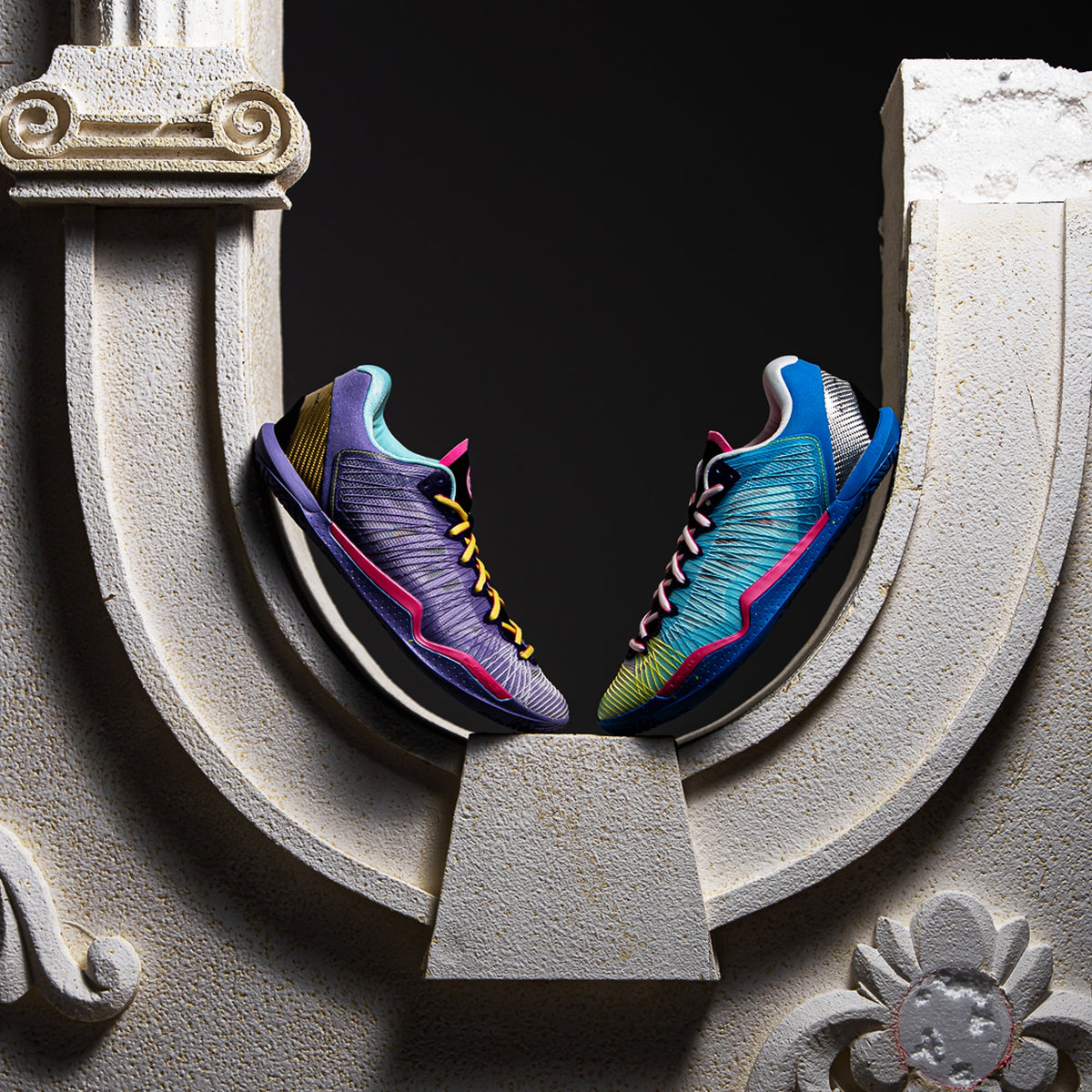

ANTA KAI Speed 3 Review: What We Know So Far
The KAI Speed 3 looks like a cleaner, more conventional low-top built around the same basic idea that made the Speed line useful: court feel, quick transitions and enough structure for hard changes of direction. Its broad base, wrapped sidewalls and visible midfoot support are encouraging. The honest verdict, however, is that this is still too early for a performance score. The shoe is listed for retail, but ANTA has not yet published a complete global technology sheet and credible long-term testing remains thin.

Speed,
without the guesswork.
Visible construction can be evaluated now. Cushioning names, fit advice and court performance still need proper confirmation.
KICKSOWN.com product photography · ‘Origin’ colorway
The temptation with a new Kyrie Irving shoe is to fill every gap in the spec sheet with a familiar ANTA technology name. That would make this article sound more complete, but it would not make it more accurate. The regular KAI line and the KAI Speed line are related, not interchangeable. A feature reported for the standard KAI 3 does not automatically belong to the KAI Speed 3.
So this review starts with the retail pair in front of us. The KAI Speed 3 ‘Origin’ is a low-top basketball shoe with a textile-and-synthetic upper, a substantial heel structure, a broad forefoot, a rubber outsole and a clearly visible midfoot support element. It is currently listed by KICKSOWN under model number 112641121-1. Those are useful facts. They do not yet tell us the exact foam formulation, how the rubber behaves on dust or whether every foot should use its normal size.
The forefoot width, sidewall geometry and midfoot structure give the shoe a more planted appearance than its streamlined upper suggests.
Speed 3 replaces much of Speed 2's shield-like visual bulk with an easier-to-read textile-and-overlay package.
Until ANTA publishes the final global tech sheet, the named foam and plate construction should not be treated as settled.
What the retail pair actually confirms
Product photography is not a substitute for playing in a shoe, but it is enough to separate visible engineering from internet repetition. The Speed 3 has a familiar guard-shoe outline: low collar, modest toe spring and a base that extends beyond the upper through key lateral zones. The upper is visually lighter than the frame beneath it. Textile dominates the forefoot and midfoot, while synthetic overlays add shape around the eyestay, toe and heel.
The lateral sidewall is the more interesting part. Triangular openings break up a raised carrier around the midfoot, while the heel is held by a visibly firmer external structure. Underneath, the outsole uses a dense field of directional chevrons that turn around the forefoot and heel. A contrasting piece remains exposed through the middle of the outsole. It looks designed to control torsion, but its exact material and official name have not been confirmed on a global ANTA page.
What can be stated now
A low-top build, textile and synthetic upper components, rubber outsole, broad forefoot geometry, reinforced heel, wrapped lateral structure, exposed midfoot support element, model 112641121-1 and the live ‘Origin’ retail listing.
What should stay off the spec card
The final branded foam system, any carbon-plate claim, measured weight, true-to-size verdict, break-in period, clean-court bite, dust tolerance, impact protection and long-term outdoor durability.
That distinction matters because the silhouette does make several promises. The outrigger-like forefoot shape suggests an emphasis on lateral stability. The heel clip suggests more than cosmetic reinforcement. The outsole layout looks capable of biting from multiple approach angles. Each of those observations describes design intent; none proves the result. Basketball shoes regularly look stable and still tip awkwardly, or display aggressive tread and struggle once dust enters the equation.
An early performance read, without invented scores
Cushioning: the name matters less than the tune
The Speed line has traditionally prioritized a closer connection to the floor over a tall, plush ride. ANTA officially described the KAI 2 Speed as a low-to-the-ground model using A-SHOCK PRO cushioning, and Speed 3 appears to preserve that leaner geometry. That does not confirm the same foam package. What the side profile does show is a controlled stack with sidewalls rising around the foot. Expecting a direct, guard-friendly platform is reasonable; promising bounce, softness or impact protection before a retail test is not.
Traction: a promising pattern is only the opening argument
The rubber outsole uses tightly spaced, multidirectional chevrons rather than a decorative lifestyle tread. The lines change direction around pivot and braking zones, which is the right visual recipe for cuts and deceleration. Compound, contact pressure and dust management will determine whether that recipe works. Until multiple retail pairs have been tested on clean and dusty hardwood, this section should remain a construction read—not a declaration that traction is elite.
Support: the strongest case on paper
Speed 3's support story is visible from almost every angle. The forefoot sits on a broad platform, the midsole carrier wraps the sides, the heel is heavily structured and a separate element bridges the midfoot. These pieces address lateral containment and torsional control without forcing the upper to become thick. The unresolved question is balance: too much carrier stiffness can make a fast shoe feel mechanical, while too little upper tension can allow the foot to slide above a stable base. Lacing and break-in will decide how well both halves work together.
Fit and lockdown: do not buy from silhouette alone
The rounded forefoot looks less pointed than many speed shoes, but photography cannot reveal usable internal width. The layered eyestay should allow the laces to draw the upper down over the midfoot, and the padded heel shape looks designed for conventional rearfoot hold. That is as far as a responsible early review can go. There is not yet a broad enough retail sample to call the shoe true to size or recommend an automatic half-size change. Use foot length in centimeters, compare it with ANTA's size chart and treat live retailer advice as model-specific.
Materials and durability: lighter does not mean disposable
The upper mixes breathable-looking textile zones with reinforcement where basketball movement creates stress. That is a sensible way to trim bulk without leaving the shoe entirely dependent on soft mesh. The outsole is rubber, yet rubber alone is not proof of outdoor longevity; thickness, hardness and bonding all matter. The visible tread should handle occasional mixed use better than exposed foam would, but buyers planning regular concrete sessions should wait for wear photos rather than treating the pattern as a durability guarantee.
ANTA KAI Speed 3 vs KAI 2 Speed
The Speed 3 is easiest to understand as a change in execution, not a rejection of the line. KAI 2 Speed already had a clear job: sit lower, move quickly and provide a more agile alternative to the main KAI model. Speed 3 keeps that brief while making the upper look less armored and the chassis easier to read.
| Area | KAI Speed 3 | KAI 2 Speed | Early takeaway |
|---|---|---|---|
| Design direction | Cleaner low-top profile with textile panels, fused overlays and a more exposed sidewall structure | Low-to-the-ground speed model with a more obvious shield-like upper and TPU support language | Speed 3 looks visually lighter and less complicated, though appearance does not confirm lower weight |
| Cushioning | Final globally published technology name not yet confirmed | ANTA officially identifies A-SHOCK PRO cushioning | Speed 2 remains the known quantity; do not assume Speed 3 uses the same setup until ANTA says so |
| Outsole | Rubber with dense directional chevrons visible across forefoot and heel | Multidirectional rubber outsole on the established retail model | The new layout looks purpose-built, but Speed 2 has the longer real-world record |
| Containment | Raised carrier, broad forefoot, reinforced heel and visible midfoot bridge | TPU-led structure around the established Speed 2 chassis | Speed 3 reorganizes the support rather than simply adding more material |
| Evidence level | Early retail images and limited launch information | Official global page, wider release history and a much larger body of wear feedback | A performance verdict is currently safer on Speed 2 |
If your Speed 2 already fits well and performs reliably, nothing currently confirmed makes Speed 3 an automatic upgrade. The new shoe is most compelling for players who found Speed 2 visually busy, wanted a more conventional lacing-and-upper arrangement or simply prefer the new base geometry. For everyone else, waiting for the final tech disclosure and several independent retail-pair tests is the sensible move.
Who should buy the KAI Speed 3?
Early adopters will see the appeal immediately. ‘Origin’ is distinctive without looking like a costume, the low-top shape suits quick guards and the platform appears to have been built with lateral movement in mind. Players who prioritize a close court connection over maximum underfoot softness are also the most logical audience—provided the final cushioning tune follows the Speed line's established direction.
There are three groups who should wait. First, players buying primarily for plush impact protection need confirmed foam details and on-court compression feedback. Second, wide-foot buyers need actual internal measurements rather than a visual guess based on the rounded toe. Third, outdoor-only players should wait for abrasion results. A visible rubber outsole is a starting point, not a warranty.
 Current listingKAI Speed 3 → Origin
ANTA KAI Speed 3‘Origin’
A linen-toned launch colorway with teal, burgundy and gold accents across the low-profile Speed 3 chassis.
Price and live size availability may change. Listing checked September 7, 2026.
FAQ
Has the ANTA KAI Speed 3 been released and where can I buy it?
The KAI Speed 3 has a live Chinese retail presence, and KICKSOWN currently lists the ‘Origin’ colorway on their webiste: www.kicksown.com.
What cushioning technology is in the KAI Speed 3?
A complete model-specific global technology sheet was not available at the time of writing. KAI 2 Speed officially used A-SHOCK PRO, but that does not prove Speed 3 uses an identical setup. Claims about NitroEdge, a carbon plate or another named system should remain unconfirmed until ANTA publishes them for this exact model.
Is the KAI Speed 3 better than the KAI 2 Speed?
Not yet on evidence. Speed 3 presents a cleaner upper and a promisingly broad, structured platform, while Speed 2 has confirmed cushioning details and a much larger body of real-world use. Players who already like Speed 2 do not need to upgrade solely from the new shoe's appearance.
Does the ANTA KAI Speed 3 fit true to size?
There is not yet a broad enough, credible retail sample for a universal sizing verdict. Measure your foot in centimeters, compare that number with ANTA's current size chart and use retailer guidance for the KAI Speed 3 specifically. Do not base a size change only on photos of its rounded forefoot.
Is the KAI Speed 3 good for outdoor basketball?
The shoe has a rubber outsole with a dense directional pattern, but outdoor durability has not been established by long-term wear. Occasional mixed use may be reasonable; frequent concrete players should wait for outsole abrasion reports before treating it as an outdoor-first option.
Grab yours at kicksown.
Which one will you purchase? Kai speed 2 or speed 3? Leave your comments below.
View KAI Speed 3 ‘Origin’