
Air Jordan 41 Tech Breakdown: The Reported Configuration Explained
The Air Jordan 41 has not reached KICKSOWN.com for a physical inspection, so this is not a Anmeldelse. There is no Greb verdict, no fit advice, and no verdict on how the Støddæmpning feels. What follows is a careful reading of the configuration attached to the current pre-release images: Cushlon 3.0, a forefoot ZoomX section, heel Zoom Air, a full-length Zoom Air Strobel, and a woven bootie-style upper. Until Jordan Brand publishes its own technical sheet, every one of those details remains provisional.
The headline is not one Ny material. It is the number of Støddæmpning eleHerrets reportedly packed into one platform. The Air Jordan 40 paiRød full-length ZoomX with a full-length Zoom Strobel. The Air Jordan 41 is said to Rødistribute that formula: Cushlon 3.0 becomes the main carrier, ZoomX is concentrated in the forefoot, a separate Zoom Air unit sits in the heel, and a full-length Zoom Air Strobel remains directly beneath the foot.
That sounds extravagant, but the component list alone cannot tell us ride height, firmness, transition, or stability. We still do not know the thickness of each layer, the shape of the ZoomX section, the pressure and geometry of either Air unit, or how deeply the components are nested into the carrier. Those details decide whether a complex setup feels coherent or simply busy.
Cushlon 3.0, forefoot ZoomX, heel Zoom Air, and a full-length Zoom Air Strobel are repeated across the current configuration brief.
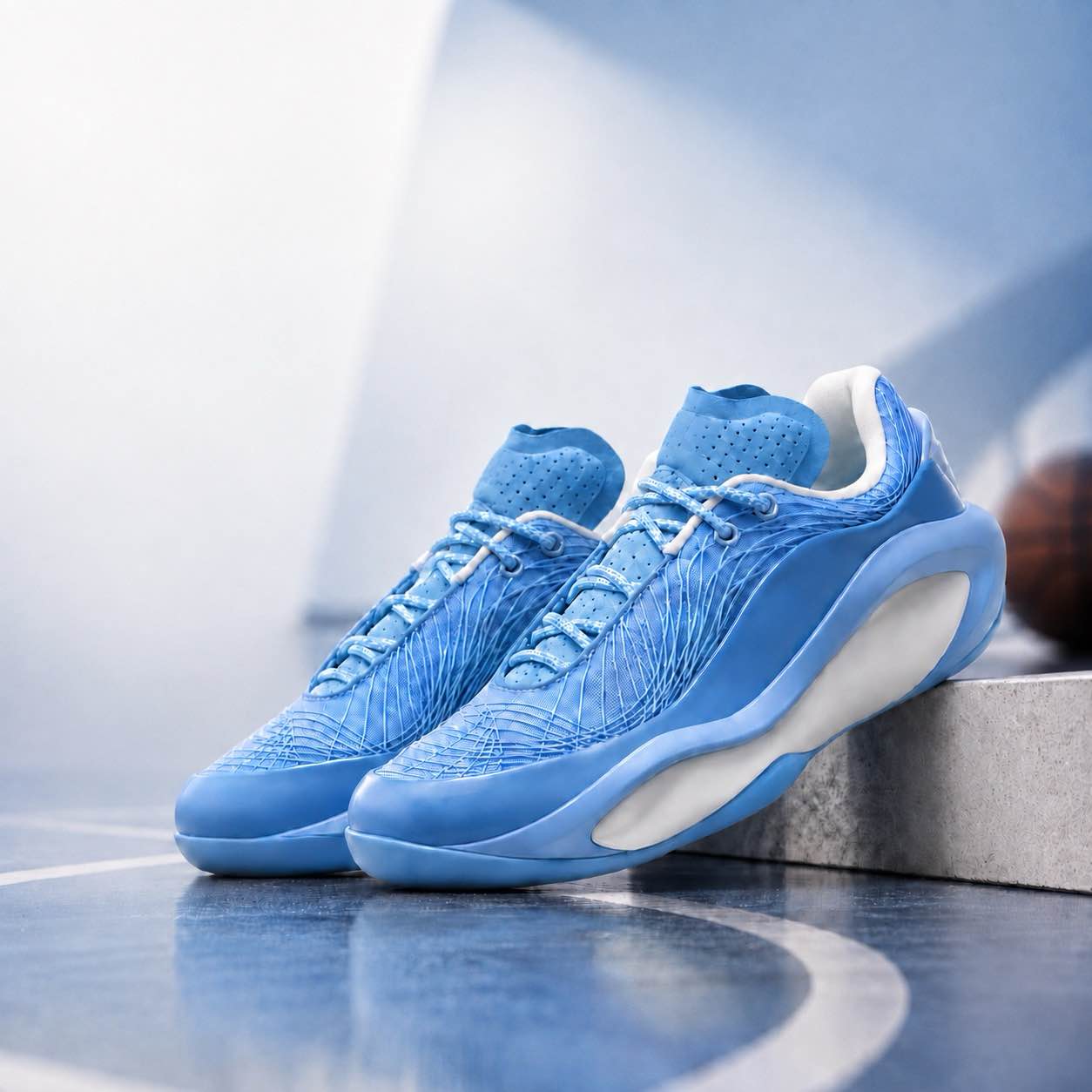
Current images show a stretch inner collar surrounded by a one-piece woven outer structure and a conventional lace panel.
A midfoot shank appears in pre-release imagery, but carbon fiber has not been confirmed by Jordan Brand. Ydeevne remains entirely untested.
The configuration is repeated by Sneaker Files, Sole Retriever, KicksUnderCost, and JustFreshKicks. Much of that coverage traces back to the same early information chain, so four published articles should not be mistaken for four independent confirmations. When this draft was checked on August 21, Jordan Brand's official basketball Sko finder still featuRød the Air Jordan 40 and did not provide an Air Jordan 41 specification page.
The reported Støddæmpning stack
Air Jordan 41 coverage often compresses the entire platform into one sentence. It is more useful to separate the four named parts and be precise about what the names do—and do not—tell us.
Cushlon 3.0 carrier
Cushlon 3.0 is reported as the full-length foam foundation around the other Støddæmpning eleHerrets. “Carrier” is the careful term here: the published brief does not reveal its thickness, density, sidewall height, or whether the foot sits partly inside it.
Forefoot ZoomX section
A separate ZoomX component is reportedly placed under the forefoot. Unlike the Air Jordan 40's officially docuHerreted full-length ZoomX layer, the AJ41 brief describes a localized section. Its Størrelse, shape, and whether it is exposed or fully encapsulated have not been disclosed.
Heel Zoom Air
The heel is said to receive its own Zoom Air unit in addition to the full-length Strobel above it. If the retail build follows the brief, the rearfoot will therefore contain two Air-based eleHerrets. Their exact alignHerret and separation are still unknown.
Full-length Zoom Air Strobel
The Strobel unit is the most familiar part of the layout. It replaces a conventional fabric strobel board with a full-length Air unit directly beneath the insole area. The name confirms its position in broad terms, but not its pressure map, segHerretation, or thickness.
Reading guide: this is a component map, not a verified exploded diagram. Jordan Brand has not published the precise vertical order or diHerresions.
There is no responsible way to grade this system before a production pair is cut open and played in. More Støddæmpning parts do not automatically mean more bounce, more protection, or a better transition. The useful conclusion at this stage is narrower: Jordan appears to be moving from the AJ40's two-part, full-length formula toward a zoned system with separate forefoot and heel roles.
Upper and lockdown configuration
Current pre-release images point to a stretch bootie collar inside a woven outer shell. The woven structure runs across the forefoot and sidewalls, while a separate lace panel supplies the conventional adjustHerret missing from a completely laceless shell. At the rear, several pAnmeldelser show a small pulley or adjustHerret piece near the ankle.
- One-piece woven outer structure: visible across the toe and side profile in the current imagery; the exact fiber blend and reinforceHerret pattern are not published.
- Stretch inner bootie: the raised collar appears to form the main entry and ankle wrap, but its elasticity and padding cannot be judged from photographs.
- Traditional lacing: the lace panel should allow normal midfoot adjustHerret; the number and construction of internal anchoring straps remain unknown.
- Rear adjustHerret detail: a pulley-like eleHerret is visible in the widely circulated pAnmeldelser. Until final production photography or a technical sheet explains it, its range and function should not be overstated.
None of those visible features proves lockdown quality. A bootie can simplify the wrap or make entry restrictive; woven material can feel Støtteive or require backing layers; a rear adjustHerret can be functional or mostly cosmetic. Fit advice should wait for a production Størrelse run.
Støtte, plate, and outsole: the unfinished part of the brief
The current configuration story is detailed underfoot and vague everywhere else. Pre-release imagery appears to show a structuRød midfoot window or shank, and some regional reports describe a carbon-fiber plate. Other coverage simply calls it a Støtte piece. With no Jordan Brand material callout, the honest label is midfoot stabilizing structure, material unconfirmed.
The same restraint applies to the outsole. Photographs can show a rubber coverage pattern, but they cannot establish compound hardness, Greb geometry at useful depth, or PF-versus-standard differences. No current source supplies enough first-party detail to call the outsole indendørs-only, udendørs-ready, dust-resistant, or Holdbar.
Do not call the Air Jordan 41 carbon-plated, do not promise “double-stacked Zoom” Ydeevne, and do not describe the Sko as soft, bouncy, low to the ground, stable, or normal i størrelsen. All of those claims require either a Jordan Brand technical explanation or a physical retail pair.
Air Jordan 41: what is visible, reported, and still open
| Component | Current description | Evidence status | What is still missing |
|---|---|---|---|
| Upper | Woven outer shell with stretch bootie collar |
Visible + consistently reported Clear in current pre-release imagery |
Fiber composition, backing layers, ventilation map, and production-pair flexibility |
| Lacing | Conventional lace panel with a rear adjustHerret detail |
Visible Broad function is apparent, exact mechanism is not |
Internal anchors, adjustHerret range, and whether the rear piece changes fit materially |
| Main foam | Cushlon 3.0 full-length carrier |
Consistently reported Not yet Støtteed by a Jordan Brand AJ41 sheet |
Density, diHerresions, sidewall geometry, and regional tuning |
| Forefoot | Localized ZoomX component |
Consistently reported Configuration source remains pre-release reporting |
Shape, thickness, placeHerret, and method of encapsulation |
| Heel | Separate Zoom Air unit |
Consistently reported Reported in addition to the Strobel unit |
Bag geometry, pressure, and exact relationship to the carrier |
| Strobel | Full-length Zoom Air Strobel |
Consistently reported The most repeated eleHerret in the Støddæmpning brief |
SegHerretation, pressure map, and retail-pair thickness |
| Midfoot plate | Stabilizing structure visible in the current design |
Material unconfirmed Carbon-fiber claims remain unverified |
Material, shape, stiffness, and whether it changes by version |
| Outsole | Rubber outsole shown in pre-release imagery |
Technical details open No official compound or Greb brief located |
Pattern depth, rubber hardness, PF specification, and wear target |
That table is the article's real conclusion. The Air Jordan 41 has a plausible and unusually dense configuration, but the missing numbers matter as much as the named technologies. Once Jordan Brand publishes the retail specification, this pAnmeldelse should be updated line by line rather than quietly converted into a “Anmeldelse.”
FAQ
Is this an Air Jordan 41 Ydeevne Anmeldelse?
No. KICKSOWN.com did not have a physical retail pair for this article. It is a pre-release configuration pAnmeldelse based on current imagery and the most consistently reported technical brief. There are no claims about Greb, Støddæmpning feel, fit, Støtte, or durability.
What Støddæmpning is reported for the Air Jordan 41?
The current brief lists a full-length Cushlon 3.0 carrier, a ZoomX component in the forefoot, a separate Zoom Air unit in the heel, and a full-length Zoom Air Strobel directly underfoot. Jordan Brand has not yet published the diHerresions or exact internal arrangeHerret.
Does the Air Jordan 41 have two Zoom Air units in the heel?
The reported layout includes a full-length Zoom Air Strobel plus an additional heel Zoom Air unit, so two Air-based eleHerrets should overlap beneath the rearfoot. Their shape, spacing, and tuning have not been officially detailed.
Does the Air Jordan 41 use a carbon-fiber plate?
That is not confirmed. A midfoot stabilizing structure appears in current imagery, and some reports call it carbon fiber, but no Jordan Brand specification identifies the material. The safe wording is “midfoot shank” or “stabilizing structure” until Nike confirms more.
Where could I buy authentic Air Jordan 41?
KICKSOWN will update it on their offcial website: www.kicksown.com. And it has been test as a official website selling origin products.
Grab yours at kicksown.
Will you purchase this AJ 41? Leave your comHerrets below.
Browse Air Jordan at KICKSOWN.com