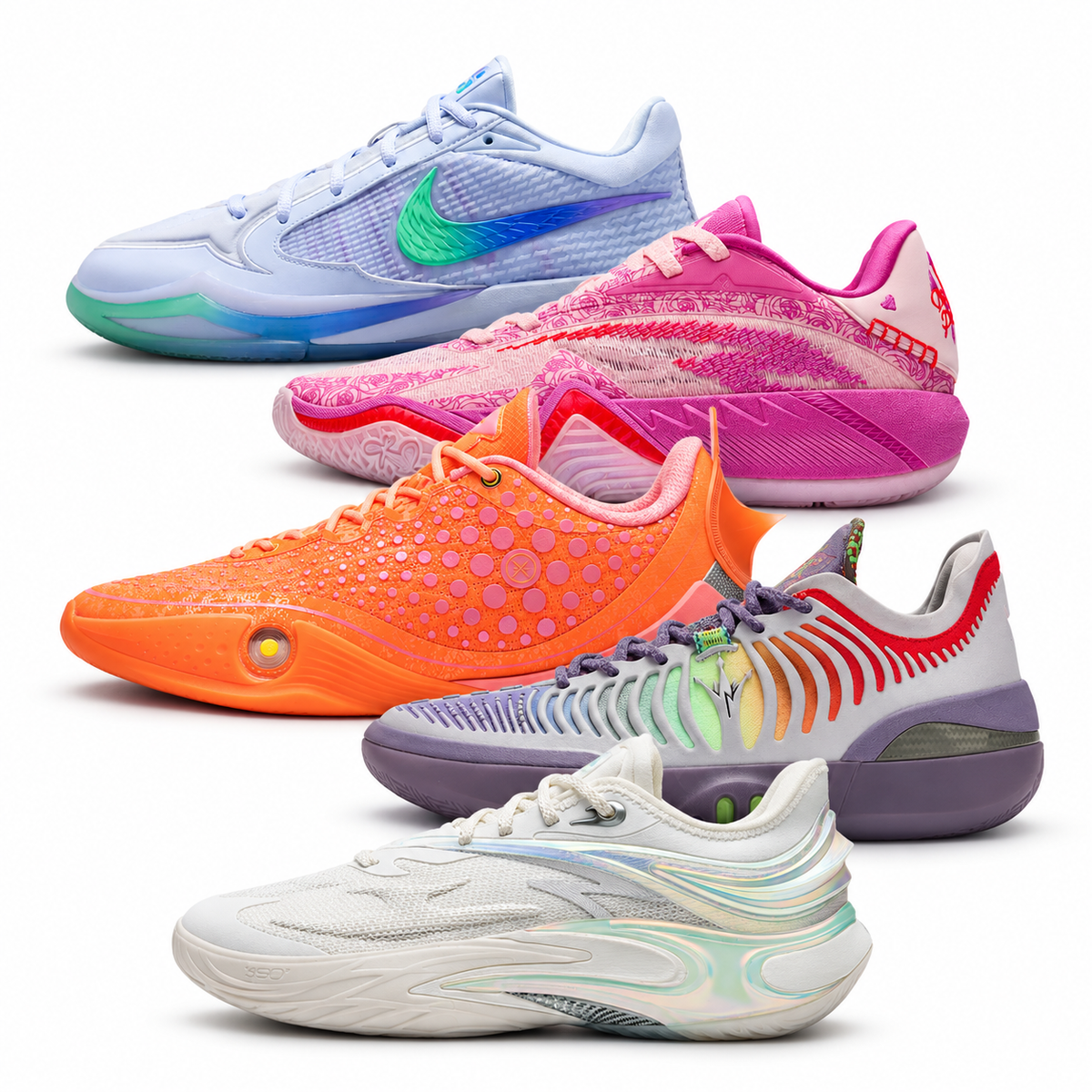

The Nike KD 17 is no longer the newest Kevin Durant signature shoe, but its formula still makes sense: responsive forefoot Air Zoom, Nike Air cushioning in the heel, springy foam, multidirectional traction and a structured support system. This review looks at whether that balanced setup is still worth buying in 2026—and which players will get the most from it.
The KD 17 remains a strong al around performer
It combines reliable multidirectional traction, responsive forefoot cushioning, comfortable heel protection and a supportive chassis without becoming a heavy maximum-cushion shoe. Its greatest strength is balance, so the shoe can work for guards, wings and mobile forwards.
The KD 17 was designed for players who keep moving—running the floor, stopping into jumpers, changing direction and immediately starting another action. A large forefoot Air Zoom unit provides quick response, while Nike Air cushioning in the heel and springy foam soften repeated impacts.
Underfoot, the outsole uses contoured ridges inspired by a topographical map. The pattern bends in multiple directions, matching a positionless player who may attack from the perimeter on one possession and work from the mid-post on the next.
The KD 17 is not the lowest or lightest-feeling guard shoe, and it is not a deeply plush maximum-cushion model. Instead, it sits in the useful middle: responsive enough for quick moves, protective enough for long sessions and structured enough for stronger players.
Responsive cushioning, dependable traction and enough support for guards, wings and mobile forwards.
Minimal guard-shoe fans may want a lower platform, while high-impact players may prefer a thicker cushioning setup.
Nike KD 17 performance ratings
Traction
Topographical-map ridges flex and deflect in multiple directions for cuts, stops, pivots and straight-line attacks.
Cushioning
Large forefoot Air Zoom, heel Nike Air and springy foam deliver a responsive ride with useful impact protection.
Support
A strong forefoot plastic piece, arch support and molded side structure help control lateral movement.
Court feel
The platform remains connected and predictable, although it is not as stripped-back as a dedicated low-to-the-floor guard shoe.
Upper
A breathable textile base and wavy molded cage balance flexibility, visual identity and lateral containment.
Fit
The safest starting point is your normal Nike basketball size, followed by a CM or EU chart check for your foot shape.
Outdoor use
EP versions use extra-durable rubber and are the better choice for regular outdoor basketball.
Traction: the strongest part of the KD 17
Nike describes the outsole pattern as a topographical map. Curved ridges run across the sole in different directions instead of relying on one traditional herringbone orientation.
The pattern is designed to load from multiple angles during crossovers, pull-ups, pivots and defensive slides. It gives the shoe a natural match for players who frequently move between perimeter creation and interior footwork.
On a clean indoor court, traction is the clearest reason to choose the KD 17. Dust can still affect any outsole, so occasional wiping remains useful.
Cushioning: forefoot pop with dependable heel protection
A large Air Zoom unit sits beneath the forefoot, where players load during their first step, pull-up and jump. The unit provides a snappy sensation instead of forcing the foot through a thick layer of soft foam.
Nike Air cushioning in the heel handles landings and repeated full-court running, while springy foam connects the two zones.
Players who stay on their toes should feel the KD 17’s best feature immediately. Heel strikers and heavier athletes still receive useful protection, but anyone seeking maximum softness may want a thicker platform.
Support and stability: structured without feeling overbuilt
Nike places a strong plastic piece around the forefoot and a supportive component beneath the arch. Together, they resist excessive twisting and help keep the foot aligned when a player plants hard or changes direction.
The wavy molded cage reinforces the textile base through the sides of the shoe, creating additional lateral structure without covering the entire upper in heavy synthetic material.
This makes the KD 17 especially useful for wings and taller ball handlers. It offers more structure than many speed-first guard models while remaining mobile enough for perimeter movement.
Upper and lockdown: flexible textile inside a molded cage
The KD 17’s design is easy to recognize because of the curved plastic fingers running along the upper. Beneath that cage is a lighter textile layer that allows the foot to flex and breathe.
The textile prevents the shoe from feeling unnecessarily rigid, while the cage helps contain the foot during lateral movement. Traditional lacing controls pressure through the midfoot.
The molded sections can feel firmer than a one-piece knit upper during the first sessions. Players who prefer a sock-like upper may need a short break-in period.
Fit and sizing: begin true to size, then check CM or EU
The safest starting point is your usual Nike basketball size. Fit can change with foot width, sock thickness and the difference between standard and EP regional versions.
Kicksown lists US men’s, UK and EU conversions. Measure heel-to-toe length and compare it with the live chart before ordering; EU44 corresponds to US Men’s 10 on the featured product page.
Narrow-foot players should focus on heel lockdown rather than automatically sizing down. Wide-foot players should prioritize the EP version when available and verify forefoot measurements carefully.
Indoor or outdoor: choose the EP version for concrete
Standard KD 17 versions make the most sense on indoor hardwood. Frequent play on rough concrete will naturally wear the detailed outsole ridges faster.
Nike specifically equips EP versions with extra-durable rubber for outdoor courts. If most of your sessions are outside, the EP outsole is the smarter choice.
The featured KD 17 NRG EP ‘Aunt Pearl’ combines that outdoor-oriented rubber with forefoot Air Zoom, heel Nike Air and the same supportive structure.
Nike KD 17 review at a glance
| Category | KD 17 setup | On-court result | Rating |
|---|---|---|---|
| Best for | Versatile guards, wings and mobile forwards | Balanced performance across scoring, transition and defense | All-around pick |
| Traction | Multidirectional topographical ridges | Strong grip for cuts, pivots, stops and changes of pace | 9.0 / 10 |
| Cushioning | Forefoot Air Zoom, heel Nike Air and springy foam | Quick forefoot response with balanced landing protection | 8.5 / 10 |
| Support | Forefoot plastic piece, arch support and molded cage | Controlled lateral movement and torsional stability | 8.5 / 10 |
| Court feel | Medium-height responsive platform | Connected and predictable, but not ultra-minimal | 8.0 / 10 |
| Upper | Textile base with wavy molded reinforcement | Flexible through the foot with added side containment | 8.0 / 10 |
| Fit | Secure performance shape | Start true to size and verify with CM or EU measurements | 8.0 / 10 |
| Outdoor use | Extra-durable rubber on EP versions | EP is the preferred choice for regular concrete play | EP: 8.0 / 10 |
| US Men’s 10 | KD 17 NRG EP ‘Aunt Pearl’ | EU44, available when checked | $169 |
| Overall | Balanced Kevin Durant signature model | Still competitive when discounted below newer premium shoes | 8.5 / 10 |
Who should buy the Nike KD 17?
Buy it if your game changes from possession to possession
The KD 17 suits players who need one shoe for transition, half-court creation, pull-ups, defensive slides and occasional post work.
Buy it if you want cushioning without losing control
Forefoot Air Zoom creates pop, while the plastic support pieces prevent the platform from feeling uncontrolled during lateral movement.
Skip it if minimal court feel is your only priority
Smaller guards who want the lowest possible ride may prefer a lighter platform. Players who want maximum foam compression may prefer a more cushioning-focused model.
the KD 17 has aged well
The Nike KD 17 remains relevant because its core performance formula is not dependent on novelty. Strong multidirectional traction, forefoot Air Zoom, heel Nike Air and well-placed support still cover the demands of modern positionless basketball.
Its greatest advantage in 2026 is value. Selected KD 17 colorways can provide a proven and balanced setup for less than newer premium signature shoes.
Our overall rating is 8.5 out of 10. Buy the KD 17 if you want a dependable all-around shoe with excellent traction and responsive cushioning.
Frequently asked questions
Is the Nike KD 17 still worth buying in 2026?
Yes, especially when a colorway is priced below newerremium signature shoes. Its traction, Air cushioning and supportive structure r
Does the Nike KD 17 fit true to size?
Your normal Nike basketball size is the safest starting point. Measure your foot and confirm the live CM or EU conversion before ordering.
Is the KD 17 good for guards?
Yes. The forefoot Air Zoom and multidirectional outsole work well for guards, although speed-first players may prefer a lower and lighter shoe.
Is the KD 17 good for outdoor basketball?
Choose an EP version for regular outdoor play. Nike equips KD 17 EP models with extra-durable rubber.
What cushioning does the KD 17 use?
The KD 17 combines a large forefoot Air Zoom unit with Nike Air cushioning in the heel and springy midsole foam.
Does the KD 17 need a break-in period?
The textile portion should feel flexible quickly, but the molded cage and support pieces may feel firmer during the first sessions.
What is the biggest strength of the KD 17?
Traction is the standout feature. The topographical outsole supports cuts, pivots, pull-ups and defensive movement.
Where can I buy authentic KD 17?
Kicksown has uploaded it on their official wesbite: www.kicksown.com (even some ep versions), which has been tested as a legal one selling origin products.

Grab yours at kicksown.
Choose the KD 17 for excellent multidirectional traction, responsive Air cushioning and support that works across positions.
Shop KD 17 ‘Aunt Pearl’ View all KD 17