
How to Choose Running Shoes
The best running shoe is not automatically the softest, fastest or most expensive. It is the shoe that fits your foot, supports your intended training and still feels natural after the first few miles.

FIRST.Brand, foam and plates come after comfort and fit.
Across Reddit beginner and running-shoe communities, the recurring advice is simple: try several shoes, jog in them and choose the pair that feels natural—not the pair with the loudest marketing.
Reddit comments in this guide are real-use anecdotes, not controlled tests, sales data or universal recommendations. Research does not support choosing a shoe solely from static foot shape, and no shoe can guarantee injury prevention.
1. Start with what the shoe needs to do
A beginner building a running habit does not need the same shoe as an experienced runner chasing a marathon personal best. Define the job first, then compare models.
| Your main use | Prioritize | Avoid choosing only by |
|---|---|---|
| Daily easy runs | Comfort, stable landings, durability | Maximum softness |
| Long runs | Sustained cushioning and secure fit | First-step comfort |
| Tempo or speed work | Lower weight and responsive transition | Race-shoe appearance |
| Road racing | Efficient ride that you have tested | Carbon plate alone |
| Run-walk training | Natural walking and running stability | Very tall foam |
2. Fit matters more than the logo
Many disappointing purchases are fit problems disguised as cushioning problems. Runners frequently report narrow toe boxes, heel slip, numbness, arch pressure and shoes that feel fine while standing but uncomfortable once they begin running.
The American College of Sports Medicine recommends roughly half an inch of room between the longest toe and the front of the shoe. Your toes should move naturally, while your heel should remain secure.
Six-step fitting check
If a standard width squeezes your forefoot, do not automatically solve it by buying a much longer shoe. Look for an appropriate wide option when available and compare your foot length in centimeters with the model-specific chart.
3. More cushioning is not always better
Some runners love a soft, high-stack platform. Others find the same setup heavy or unstable. “Soft,” “protective” and “comfortable” are not interchangeable.
- You enjoy a cushioned sensation on longer runs
- The shoe remains stable when you turn
- Your heel and midfoot stay securely contained
- Your ankles feel as if they are working to balance
- The foam feels slow at an easy pace
- You prefer more ground contact and control
4. Neutral vs. stability: do not use one label as a diagnosis
A gait analysis can help you observe movement and narrow down your options, but it should not be the only reason you buy a particular category. A Cochrane systematic review found no clear injury-prevention benefit from prescribing running shoes solely according to static foot posture.
A better sequence is: observe your gait → try several shoe types → run in each pair → compare comfort and stability.
Which type of running shoe should you choose?
| Your priority | Start with | What to verify |
|---|---|---|
| First running shoe | Versatile daily trainer | Natural fit, secure heel, no pressure points |
| More comfort for long runs | Cushioned trainer | Stability after 20–30 minutes, not just softness |
| Faster workouts | Lightweight speed trainer | Grip, transition and secure upper |
| Race day | Tested racing shoe | Use it in training before competition |
| Wide feet | Foot-shaped or wide-width option | Forefoot space without heel slip |
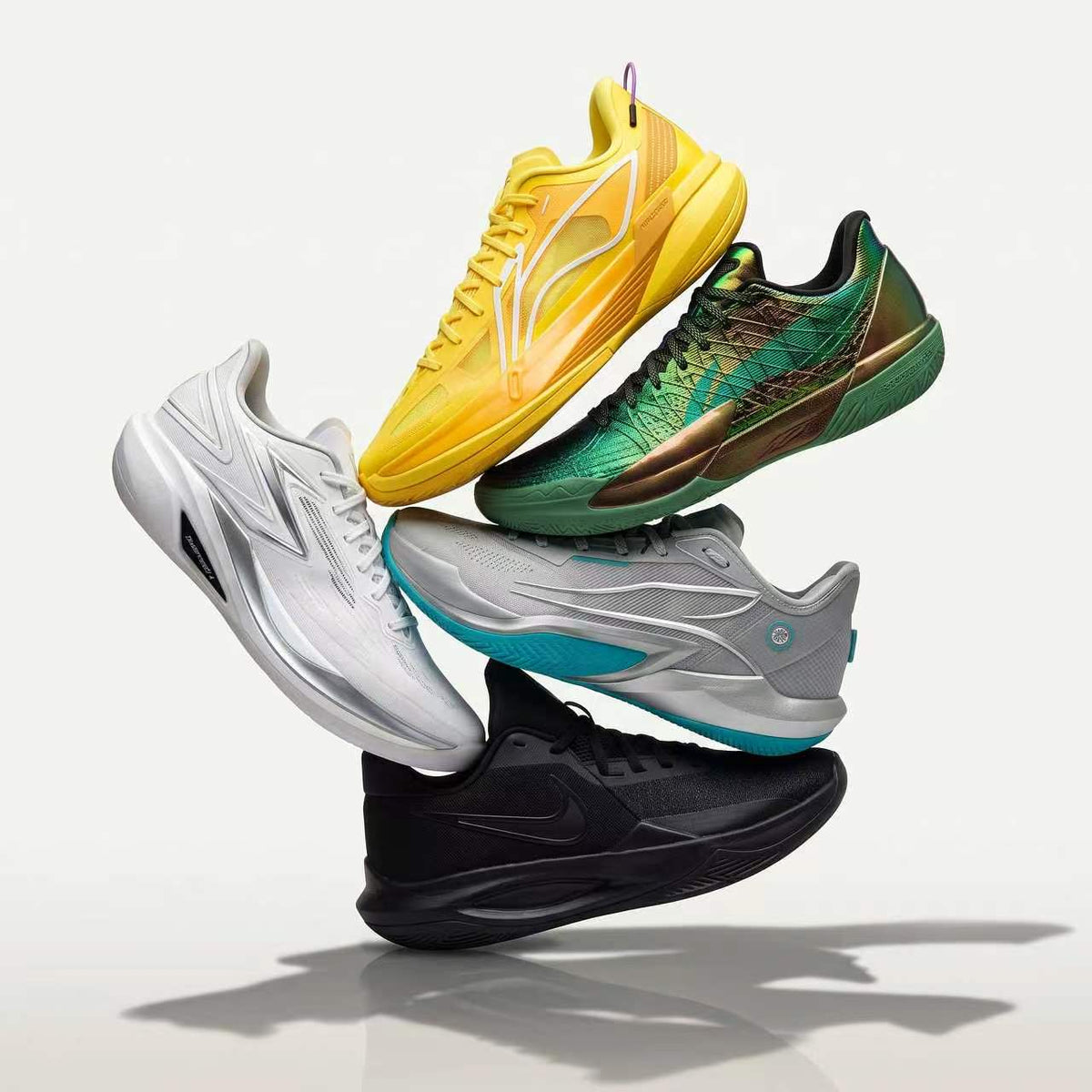
Four running shoes to consider
Choose by intended use and fit. Availability and prices below were checked on September 24, 2026 and may change.

Wind-Running 3.0 “Green Black”
An accessible entry into QIAODAN’s running range. Because the KICKSOWN product page does not currently publish a detailed technical description, base your decision on fit, intended use and the model-specific size chart.

Red Hare 9 ULTRA “Crystal Grey”
Independent testing describes the Red Hare 9 ULTRA as highly cushioned and energetic over longer distances, while noting that its lively platform may feel less stable to runners who need more support.

Shadow 3.0 “Black”
A technical performance model from Li-Ning’s professional running lineup. It is best considered by runners who already understand the ride they prefer and are ready to transition gradually from a traditional trainer.

Feidian 6 ELITE “Black Red”
A carbon-plated marathon racing shoe for runners seeking a faster race-day option. It is more specialized than a first daily trainer, so test it during training before using it in competition.
FAQ
What type of running shoe is best for beginners?
Most beginners should start with a comfortable, versatile daily trainer rather than a specialized racing shoe. Prioritize fit, secure heel hold and a stable ride.
How much space should be in front of my toes?
A common guideline is about half an inch, or approximately one thumb’s width, between your longest toe and the front of the shoe. Your toes should move naturally without your heel slipping.
Do I need stability shoes if I overpronate?
Not automatically. Static foot posture alone is not a reliable prescription. Compare neutral and stability models through an actual test run and choose the option that feels comfortable and controlled.
Is more cushioning better for running?
Not for everyone. Extra cushioning may feel protective, but a very soft or tall shoe can feel unstable to some runners. Comfort must be considered together with stability and fit.
Should beginners buy carbon-plated shoes?
Carbon-plated shoes can be useful for racing, but they are not necessary for beginning a running routine. A versatile daily trainer is usually a more practical first purchase.
Can running shoes prevent injuries?
No shoe can guarantee injury prevention. Training load, recovery, strength, previous injuries and sudden changes in speed or distance also matter.
Find the pair that fits your run.
Compare current running shoes, colorways and sizes at KICKSOWN.
Explore running shoes at KICKSOWN.COMSources and further reading: American College of Sports Medicine running-shoe guide; Nigg et al., “Running shoes and running injuries”; Cochrane Review, “Running shoes for preventing lower limb running injuries in adults”; Reddit discussions in r/beginnerrunning and running-shoe communities. This article is general information and not medical advice.